


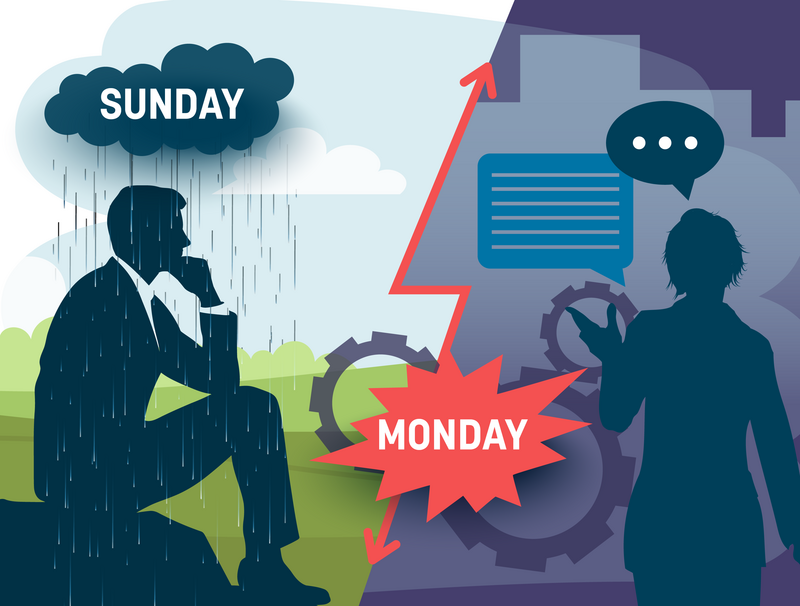
The Sunday Afternoon Anxiety
Do you know this? It is Sunday afternoon, you should be enjoying yourself with friends or family (or riding the bicycle in my case) but the closer the dreadful Monday morning comes, the more you become anxious. You can’t stop thinking about this meeting you need to moderate or this conversation you will be having with one of your team members… While everybody is enjoying the sunshine, you fell like sitting under your own little raincloud.
Imagine how great it would be to think about it briefly and feeling this sweet confidence and self-assurance that might even put a little smile into your face while you return to doing what you love? Let me assure you, that this is possible. After many years of feeling this anxiety during my first project management assignments and when I took over my first team lead position, I took matters into my own hands and started taking trainings. And read books. And discovered many great models and frameworks.
You probably have been through this as well. You get out of the training, totally enthusiastic, just to realize, that it doesn’t work in your everyday life. Or, as my colleague once put it:
“It’s great to have done this test [about another communication model] and now knowing, what type I am. Even if I can remember that, I will never know about my collocutor. What’s the use?”
The Communication Compass will not leave you like this. It is a straight forward model with clear and easy to spot signs and clues, which will tell you how to react and what to say. You will
“Talk to people the way they want to be talked to!”
You will be surprised, how much you will enjoy conversations and meetings because you know how to master them.
It might even make you looking forward to the next Monday morning…


A few examples where knowing the Compass makes the difference
You can apply the Connecting Communication Compass in any situation. No matter if you want to convince your project team, give feedback to a team member or make sure that your new applicant will fit into the team. And communication doesn't stop at work. You will be surprised how much more relaxed your family life will become...
There are stressful phases in every project that demand everything from the team members. As a project manager, I realised that the individual people in the team react very differently to this. While some people withdraw more and more and feel like they can't get anything done, others develop an almost disruptive actionism and don't (or no longer) stick to the agreed rules. Knowing the Connecting Communication Compass, I now understand this behaviour and can react accordingly before the mood changes completely or the team disintegrates.
As a leader, I often wondered why communication with some people seemed to ‘run itself’, while I simply couldn't find a connection with others. Being a Rationalist, I lost patience at some point and wondered whether some people were simply not up to the task. I started taking more and more of their tasks myself, checked more and more and came to the conclusion that the others were just ‘too stupid’... The Connecting Communication Compass taught me to understand that the supposed ‘incompetents’ simply needed a different approach. As soon as I have recognised their communication type on the compass, I could adjust my communication so that everybody could perform. And I discovered my own stress pattern which includes trying to do everything myself. It was such a relief to understand that.
With a little practice, I can already recognise the communication type of my applicants during the interview. This enables me to recognise when the stress level rises too high. If I recognise the anterior behaviour, I can reduce the pressure and switch to less stressful topics to relax the situation. On the other hand, I can also consider whether the applicant's communication style fits in with the team they are applying for. For example, would a Contemplator feel comfortable in a team of Rationalists? Would he have enough space to retreat? …
Even at a young age, I knew exactly which statements were the easiest to provoke my parents and siblings with. Or, on the contrary, how I had to argue with my parents to get my wishes fulfilled. As a child, you probably do this by trial and error and find out what works. The knowledge from the “Connecting Communication Compass” enables me to consciously strike the right tone with the members of my family and to recognise in good time when someone is slipping into their stress pattern. By better understanding why my children or partner are reacting in this way, it is easier to keep a cool head and de-escalate the situation. More quality time with the family!